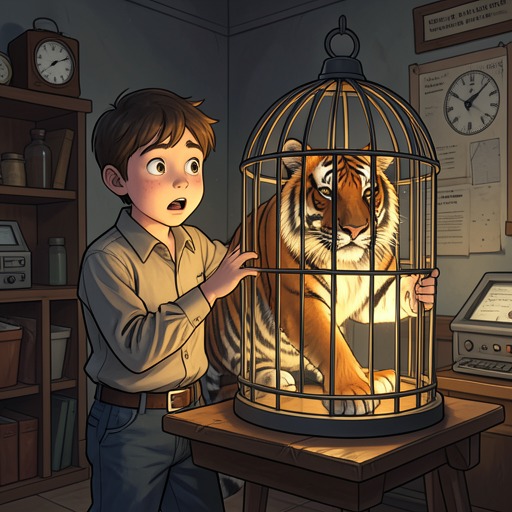
Rob and Sistine open the tiger cage and release the tiger
The Tiger RisingRob and Sistine open the tiger cage and release the tiger in a decisive attempt to turn their belief in his freedom into action. The door stands open, but the tiger does not simply leave: the children have to confront the difference between unlocking captivity and persuading a living creature to cross its threshold. When he finally runs into the grass, the release brings wonder and exhilaration, shadowed for Rob by a memory of Cricket and the uncertain consequences of letting a captive animal go.
Causes and Background
Sistine presses for action, insisting that what matters is the tiger and urging Rob to set him free. The immediate possibility that someone might come for her does not alter her resolve; she dismisses the concern and returns to the tiger’s situation. Her urgency gives the plan a moral certainty, while Rob’s role in opening the locks makes the decision something they carry out together rather than merely debate.
The scene begins with the practical work of opening the cage. The first key slips into the first lock so smoothly that Rob is dizzy with amazement at how easy release seems. He opens the second and third locks, then removes them one at a time and hands them to Sistine, who lays them on the ground. The sequence is careful and concrete: keys, locks, and the cage door make freedom appear to be a problem that can be solved by the right actions.
That ease is immediately complicated. Rob’s heart pounds as he asks what will happen if the tiger eats them. Sistine answers that he will leave them alone out of gratitude, calling them his emancipators. Her confidence expresses the moral story she wants the moment to fulfill, but it cannot determine the tiger’s behavior. Their hope that he will recognize their purpose is set against the animal’s independent response.
Opening the Cage
At Sistine’s instruction, Rob flings the door wide, and both children jump back to wait. The tiger continues pacing, apparently unaware that the exit is open. Rob tells him to go on, and Sistine whispers that he is free, but the tiger does not even look toward the door. The gap between the open cage and actual escape becomes the scene’s central reversal: they have removed the barrier, yet the captive animal remains inside.
Sistine creeps forward, grips the cage, and shakes it. She screams for the tiger to get out, then turns to Rob and asks him to help her. Rob takes hold of the fence and shakes it too. Their efforts shift from unlocking the cage to trying to provoke a response from the tiger, and their shared physical action makes the attempted release increasingly desperate.
The tiger stops pacing and stares at the two children clinging to the cage. Rob’s desperation becomes sudden fury. He shakes the fence harder, yells, throws his head back, and howls; the clouds thick overhead intensify his anger, and he shouts toward the dark sky as well as at the cage. His outburst cannot make the tiger obey, but it marks how completely the stalled escape has become an emotional test for him.
The Tiger Leaves
Sistine places a hand on Rob’s arm and tells him to be quiet: the tiger is leaving. Her touch and warning interrupt his escalation, redirecting both children from trying to force the moment toward watching it unfold. The tiger steps out with grace and delicacy. He lifts his nose to sniff, takes one small step and then another, and pauses before Sistine claps her hands. He turns to look back at them, his eyes blazing, and then runs.
The escape unfolds by degrees rather than as a sudden burst. First the tiger crosses the threshold and stands still; then he turns at Sistine’s applause; finally he accelerates away. Rob sees him move so fast that he seems to fly. His muscles flow like a river, a striking contrast to the cage that had contained him. The animal’s movement makes his former confinement seem almost unbelievable, as though the open door has revealed a vitality the cage could not erase.
The tiger bounds farther and farther from Rob and Sistine through the grass. To Rob, he resembles the sun rising and setting again and again. Watching him, Rob feels his own heart rise and fall in time with the tiger’s flight. The image links the animal’s movement to Rob’s bodily response: the release is not only something he witnesses, but a moment that gathers his own feeling into rhythm with the departing tiger.
Consequences and Significance
Sistine interprets what they have seen as confirmation that freeing the tiger was right. Rob nods, sharing the immediate recognition that the tiger has left the cage, but the moment does not settle every consequence in his mind. Instead, a flash of green brings Cricket back to him, and he remembers what happened to the bird. The memory qualifies the apparent triumph with a specific warning: freedom may be right to seek, yet release does not guarantee safety.
The scene’s emotional movement runs from confidence through fear and frustration to wonder, then ends on an unresolved recollection. The keys make the escape seem simple; the tiger’s refusal to leave shows that freedom cannot be produced by unlocking alone. Sistine’s hand on Rob’s arm steadies the moment, and the tiger’s eventual departure answers their pleas without confirming their belief that he understands or owes them gratitude. His running body, no longer enclosed, provides the scene’s vivid image of liberation, while Rob’s memory of Cricket carries its cost and uncertainty beyond the open door.